
The Volvo C70 (C70 II) (2006-2013) averages €6,773 based on 65 listings. Prices range from €2,750 to €17,900 with an average mileage of 185,658 km.
- Typical price (median): €5,990
- Typical range (middle 50%): €4,390 – €7,950
- Average price: €6,773
- Price range: €2,750 – €17,900
- Production years: 2006-2013
- Average mileage: 185,658 km
- Active listings: 65
Typical price (median)
€5,990
Listings analysed: 65
Typical price range
€4,390 – €7,950
middle 50% of listings
Full range
€2,750 – €17,900
Average: €6,773
Price History
Details
Buying guide: Volvo C70 (C70 II)
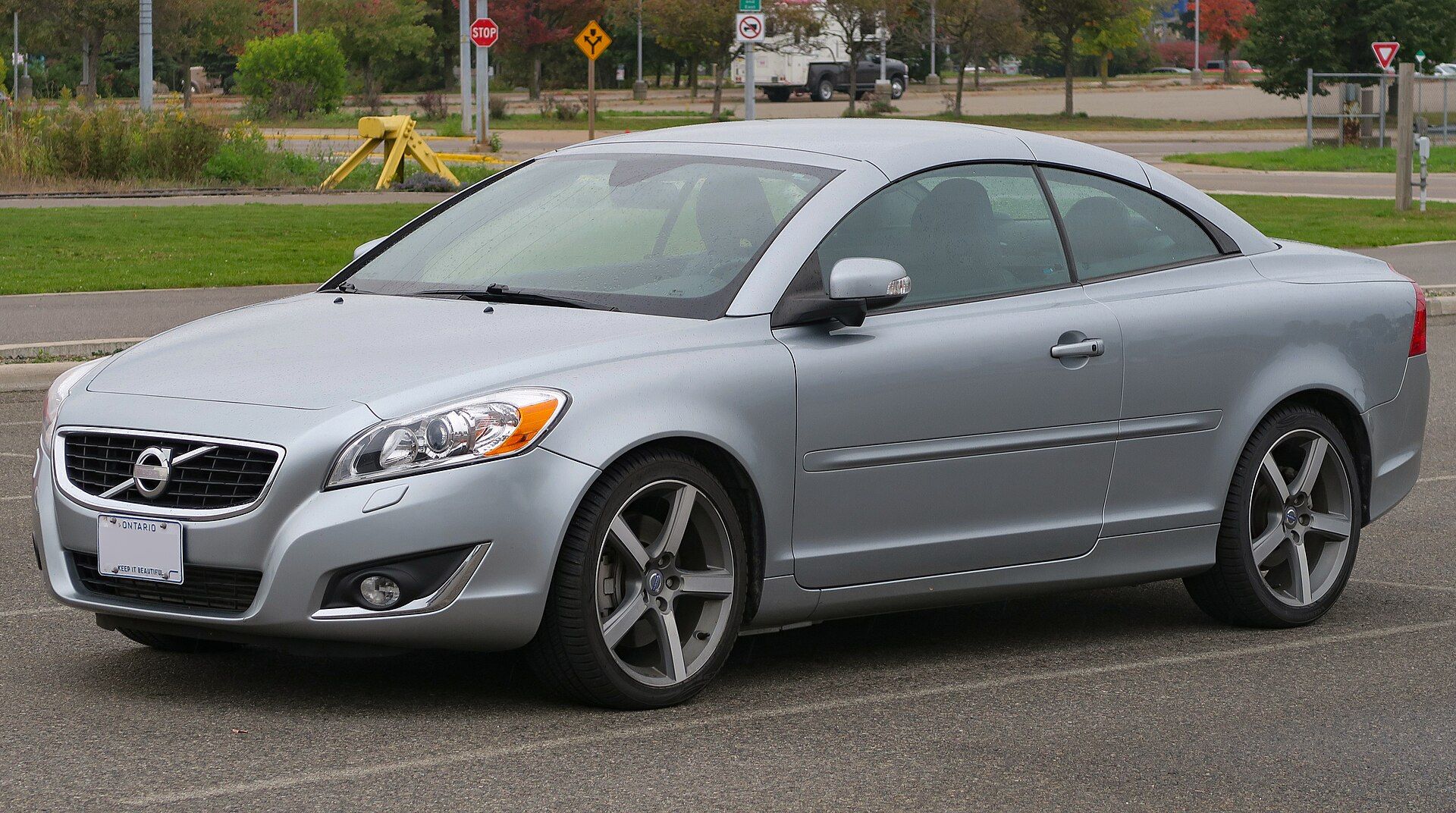
The second-generation Volvo C70 is a four-seat coupé-convertible with a three-piece folding steel roof; one car replaced both the coupé and the soft-top convertible of its predecessor. It was shown at the 2005 Frankfurt motor show, went on sale in spring 2006 and was built until June 2013 in Uddevalla, Sweden, in a joint venture with Pininfarina. It shares its underpinnings with the S40 and V50 and is always front-wheel drive. A facelift at the end of 2009 brought a new front end and LED tail lamps. The C70 is regarded as a comfortable, heavy cruiser rather than a sporty car; the roof only operates at a standstill and takes up much of the boot when folded.
Key variants
- 2.4 / 2.4i (five-cylinder petrol, 140/170 PS)
- Naturally aspirated engines with neither turbocharger nor particulate filter, offered until about 2009/2010. Technically the simplest engines in the range.
- T5 (2.5-litre turbo five-cylinder, 220, later 230 PS)
- Available throughout production and the most powerful engine in the range; the only engine sold in North America. The turbocharger and the timing belt history deserve particular attention when buying.
- D5 (2.4-litre five-cylinder diesel, 180 PS)
- Offered from 2006 until the D3 and D4 replaced it. A five-cylinder with particulate filter; covered by the oil dilution recall, so regular oil changes matter especially here.
- 2.0D (four-cylinder diesel, 136 PS)
- Offered from 2007 to 2010 and the only four-cylinder in the range. More economical than the five-cylinders but considered to need more care; one recall concerned the vacuum pump for the brake servo.
- D3 / D4 (2.0-litre five-cylinder diesel, 150/177 PS)
- Replaced the 2.0D and the D5 in 2010 and are found only in facelifted cars. Both are two-litre five-cylinders, available with manual or automatic gearbox.
Known weak points
- Roof mechanism and roof sensors. The three-piece steel roof is moved hydraulically and monitored by sensors. Faults show up as warning messages, jerky or strained movement, or a roof that stops partway through its cycle; on 2006 cars a sensor out of position was a known cause. For cars built from May to December 2006 the German ADAC lists a recall covering the roof and its electrics. Overall, the RAC counts the mechanism among the more reliable of its type. [1][2][3][4][6]
- Seals, water ingress and headlining. Worn, damaged or missing rubber roof seals lead to leaks; dried-out, brittle leather can point to earlier water ingress. Paint worn away on the roof panels suggests misaligned sections rubbing against each other. There are also reports of headlinings whose adhesive or retaining tabs give way; the sagging fabric can get in the way of the roof as it moves. [1][7]
- Diesels: oil dilution from particulate filter regeneration. On the diesels with particulate filter, regeneration can raise the oil level above the maximum mark, which in the worst case ends in engine damage. Volvo therefore recalled cars built from 2007 to 2010 in 2010; a software update adds a warning message when the oil level is too high. For the 2.4D and D5 from 2007 to 2009, more frequent oil changes than for the other engines are also advised. [4][5][8]
- T5: turbocharger and timing belt. On the turbo petrol engine, white, oily exhaust smoke after a few minutes of idling points to leaking turbo seals and a turbocharger due for replacement; a thin film of oil in the charge pipe is normal, pools of oil are not. The engine has a timing belt, and a failure causes severe engine damage, so the last change should be documented. Uneven running or hesitant acceleration can be down to a faulty engine sensor. [1]
- Suspension wear and sawtooth wear on the rear tyres. No major recurring suspension faults are known, but bushes, strut mounts and anti-roll bar links wear out; this shows as knocking or clunking on poor roads. The rear tyres can develop a sawtooth wear pattern, noticeable as loud tyre noise. [1][8]
- Recalls on steering, brakes and gearshift. The German ADAC lists several recalls: a faulty power steering return hose with fluid loss on five-cylinder petrol cars built in April and May 2008, a check valve in the vacuum pump of the 2.0D (November 2008 to March 2009) that can reduce brake assistance in cold weather, and a loosened ball pin in the shift mechanism of the six-speed manual gearbox (October 2009 to May 2010). The steering hose was also the subject of a US recall. [4][5][6]
Checklist for the viewing
- With the car stationary, open and close the roof fully several times: it should move evenly, without warning messages or sounds of strain. Test all four side windows several times as well.
- Stop the roof halfway and look at the rubber seals: they should be plump and undamaged. Check the roof panels for rub marks in the paint, the headlining for loose areas, and the cabin and boot for damp.
- On a T5, insist on a cold engine, let it idle for about five minutes until warm and watch for white, oily smoke; ask for proof of the timing belt change.
- On a diesel, check the oil level (not above maximum) and ask for evidence of regular oil changes and of the software update from the 2010 recall.
- On the test drive, listen for knocks from the suspension; inspect the rear tyres for sawtooth wear and the bumpers, wheels and long doors for parking damage.
- Have a Volvo dealer check the VIN for outstanding recalls, and check the navigation, alarm and driver display for fault messages.
Sources
- [1] Used Vehicle Review: Volvo C70, 2006-2013 — AutoTrader.ca
- [2] Volvo C70 (2006 - 2009) used car review — RAC Drive
- [3] Volvo C70 (2009 - 2013) used car review — RAC Drive
- [4] Volvo C70 Cabriolet D5 Summum Geartronic (11/07 - 11/09): Technische Daten, Bilder, Preise — ADAC
- [5] Volvo C70 Cabriolet D4 Kinetic Geartronic (05/10 - 06/13): Technische Daten, Bilder, Preise — ADAC
- [6] 2006-13 Volvo C70 — Consumer Guide Auto
- [7] Is zo'n fraaie Volvo C70 na 19 jaar eindelijk betaalbaar geworden? Dit kosten ze nu — TopGear Nederland
- [8] Volvo C70 - occasion video & aankoopadvies — Autoblog.nl
- [9] Volvo C70 — Wikipedia (deutsch)
Researched: 22 November 2026
Price Distribution
25th Percentile
€4,390
Median (50%)
€5,990
75th Percentile
€7,950
90th Percentile
€11,040
The median shows the middle price - 50% of listings are below, 50% above.
Mileage and Price
Correlation
moderate
Mileage Range
-59%
Price Trend
-€269/10k km
Relationship between mileage and price.
Market Activity
Current
65
Average
13
Maximum
112
Trend
stable
Number of listings over time. More listings mean greater selection for buyers.
Seasonal Price Patterns
Cheapest Month
Jun
€5,840
Most Expensive Month
Sep
€8,810
Price difference between cheapest and most expensive month: €2,970. The timing of purchase can significantly affect the price.
Series Comparison: C70
| Model | Average | Deviation | Listings |
|---|---|---|---|
| C70 I | €5,408 | -20% | 41 |
| C70 II | €6,773 | - | 65 |