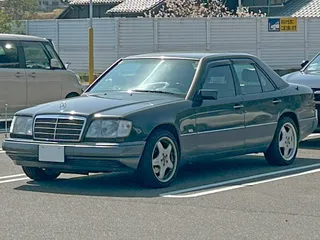
The Mercedes-Benz E-Klasse (W124) (1984-1997) averages €10,206 based on 67 listings. Prices range from €1,700 to €46,800 with an average mileage of 192,737 km.
- Typical price (median): €6,990
- Typical range (middle 50%): €4,447 – €13,400
- Average price: €10,206
- Price range: €1,700 – €46,800
- Production years: 1984-1997
- Average mileage: 192,737 km
- Active listings: 67
Typical price (median)
€6,990
Listings analysed: 67
Typical price range
€4,447 – €13,400
middle 50% of listings
Full range
€1,700 – €46,800
Average: €10,206
Price History
Details
Buying guide: Mercedes-Benz E-Klasse (W124)
The 124 series is Mercedes-Benz's upper mid-size car and the successor to the W123. The saloon appeared in late 1984, the estate (S124) in 1985, the coupé (C124) in 1987 and the cabriolet (A124) in 1991; since the mid-1993 facelift the range has been called E-Class. The saloon was replaced in 1995, estate and coupé ended in 1996, the cabriolet in 1997. More than 2.5 million were built. The W124 is regarded as carefully built, mechanically reliable and very durable, and many cars have covered high mileages. Its main weakness is rust, particularly on later cars.
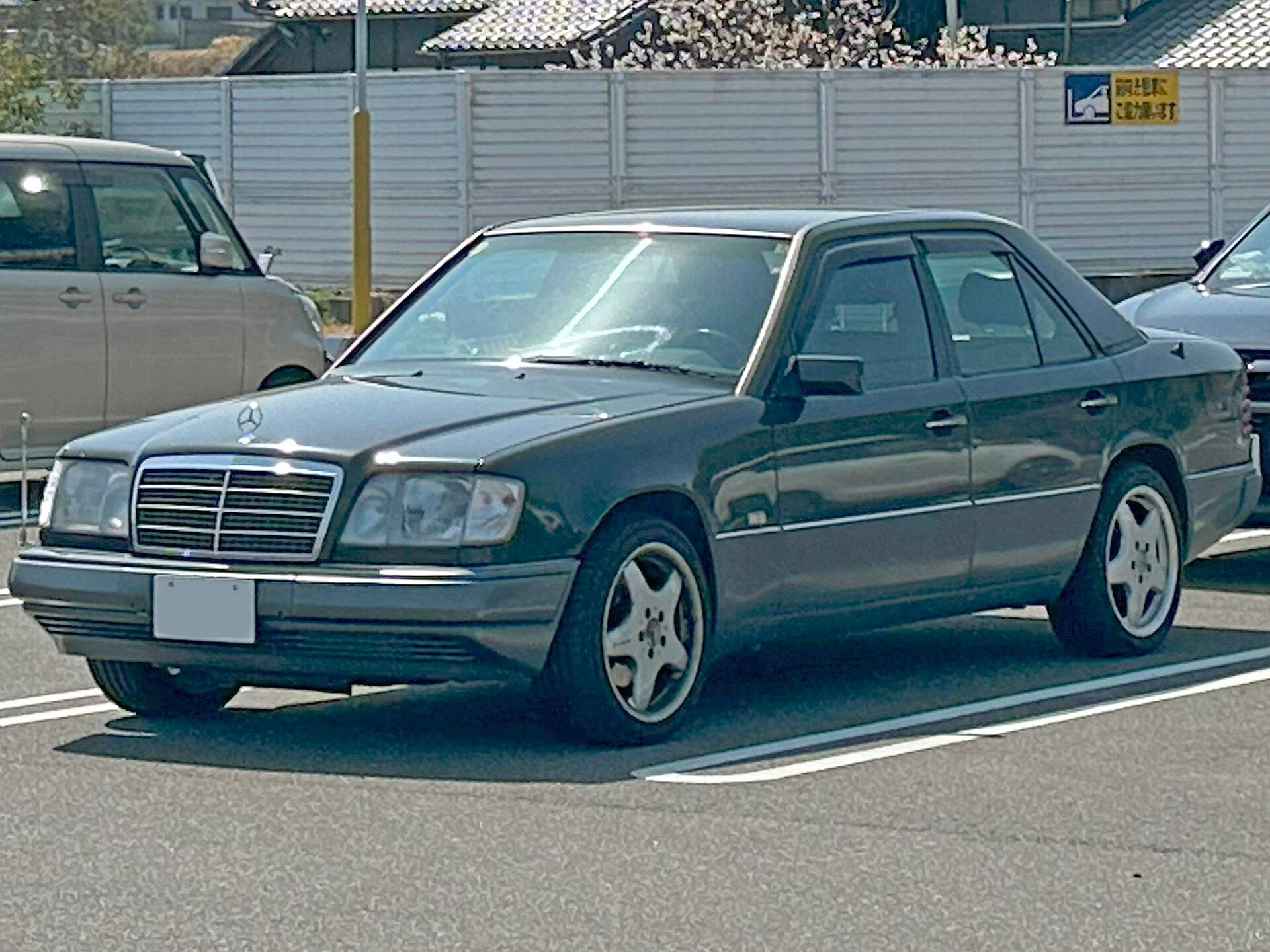
Key variants
- 200, 230 E, E 200, E 220 (four-cylinder petrol)
- The early two-valve engines are regarded as robust and uncomplicated but not lively. From late 1992 came four-valve engines (200 E and 220 E, later E 200 and E 220) with more torque and better economy. Many four-cylinder cars were used as workhorses and are worn accordingly.
- 260 E, 300 E, 300 E-24, E 280, E 320 (six-cylinder petrol)
- The two-valve 260 E and 300 E are valued for their smoothness. The sportier four-valve 300 E-24 arrived in 1989, followed in late 1992 by the 2.8 and 3.2-litre engines. The auto motor und sport buying guide names the four-valve sixes as its engine tip and considers the 2.8 sufficient.
- 200 D, 250 D, 300 D and turbodiesels
- With proper servicing the diesels are regarded as trouble-free even at high mileage. The four-cylinder 200 D is underpowered; the five-cylinder 250 D or six-cylinder 300 D is the better minimum. On the turbodiesels the turbocharger is a possible weak point. From 1993 the 250 D and 300 D have four-valve heads.
- 400 E and 500 E (later E 420 and E 500)
- The V8 models were saloon only. The 500 E arrived in 1990 and was developed together with Porsche; the 4.2-litre 400 E followed later. The engines are regarded as durable; points to watch are the timing-chain guide rails and the engine wiring loom.
- Estate, coupé and cabriolet
- The estate has self-levelling rear suspension as standard. The coupé sits on a wheelbase 8.5 cm shorter than the saloon's. The four-seat cabriolet with fabric hood was first sold as the 300 CE-24, later as E 200, E 220 and E 320. 4Matic all-wheel drive was offered on some six-cylinder models.
Known weak points
- Body rust. Typical spots are the front wings around the indicators, the jacking points behind their plastic covers, wheel arches, sills, the door bottoms beneath the plastic side cladding and the rear window frame. Moisture also collects under the washer bottle. According to the sources, cars built from about 1992/93 with water-based paint are affected more severely. [1][2][3][4][5]
- Rust-through at rear axle mounts and front subframe. The rear axle mounting points can rust through unnoticed beneath the underseal; a clunk or judder when pulling away is a hint. On the front subframe the control-arm mounts rust through. According to auto motor und sport a perforated subframe is replaced, not welded. Both can only be assessed with the car on a lift. [1][2]
- Brittle engine wiring loom. The insulation of the engine wiring loom turns brittle from engine-bay heat and crumbles. The results are short circuits, poor running and, in bad cases, damaged control units. Mainly cars from about 1993 are affected, one source says from 1991; the issue is especially relevant on the V8s. On many cars the loom has already been replaced. [1][3][5][6]
- Petrol engines: head gasket, injection, timing chain. On the petrol engines the head gasket can fail with age; oil seeping at the rear of the engine or between block and oil filter housing is a warning sign. Early engines with KE-Jetronic injection can suffer from faulty fuel distributors. On six-cylinder cars moisture at the distributor cap upsets running. On the V8s the plastic guide rails of the timing chain are the known weak point. [1][3][5]
- Wear in driveline and suspension. At high mileage the propshaft bearings and flex discs are often worn, as are control-arm bushes, anti-roll bar rubbers and the bushes of the multi-link rear axle. Automatic gearboxes may need an overhaul beyond roughly 300,000 km; harsh shifts are a sign. The five-speed manuals are regarded as less durable than the four-speeds. On 4Matic cars a failed transfer case is costly. [1][2][5]
- Points specific to estate, coupé and cabriolet. On the estate the pressure spheres of the self-levelling suspension age, and the tailgate closing aid should work. On the coupé the rear window can leak, shown by cloudy glass and rust bubbles at the seal. On the cabriolet the condition and operation of the hood matter, and edge rust can sit under the hood cover. The seat-belt presenters of coupé and cabriolet can fail. [1][3][6]
Checklist for the viewing
- Have the car put on a lift: inspect the rear axle mounts and the control-arm mounts on the front subframe, ideally with the undertray removed, and look behind the plastic covers of the jacking points.
- Check the front wings around the indicators, the door bottoms along the side cladding, wheel arches, sills, the rear window frame and the area under the washer bottle for rust and flaking paint.
- On cars from the early 1990s onwards, look at the engine wiring loom: brittle or crumbling insulation means replacement is due. Ask for the invoice if the loom has already been renewed.
- Look for oil at the rear of the cylinder head and between block and oil filter housing; watch the oil pressure after starting and the coolant temperature during the test drive.
- On the test drive, note whether the automatic shifts smoothly, whether there is a clunk or judder when pulling away and whether the steering wheel vibrates.
- On the estate check ride height and leaks of the level control and the tailgate closing; on coupé and cabriolet the belt presenters, all windows and the full hood cycle; on every car heating, air conditioning and electrics.
Sources
- [1] Mercedes-Benz W124 (1985-1996) Schwächen, Preise: Haltbarer Klassiker aus der Sacco-Ära — auto motor und sport / Motor Klassik
- [2] Die Schwachstellen des Mercedes W 124: Rostroter Bereich — auto motor und sport
- [3] Buyers Guide: Mercedes W124 — Hagerty UK
- [4] ADAC Gebrauchtwageninfos Mercedes-Benz E-Klasse 124er (1985-1996) Benziner — ADAC
- [5] Mercedes S124 kaufen: Die besten Tipps zum Kauf des T-Modells — AUTO ZEITUNG
- [6] Mercedes W124 Cabrio (A124): Classic Cars — AUTO ZEITUNG
Researched: 22 November 2026
Price Distribution
25th Percentile
€4,447
Median (50%)
€6,990
75th Percentile
€13,400
90th Percentile
€19,336
The median shows the middle price - 50% of listings are below, 50% above.
Mileage and Price
Correlation
weak
Mileage Range
-34%
Price Trend
-€318/10k km
Relationship between mileage and price.
Market Activity
Current
67
Average
90
Maximum
135
Trend
stable
Number of listings over time. More listings mean greater selection for buyers.
Seasonal Price Patterns
Cheapest Month
Nov
€10,894
Most Expensive Month
Jan
€14,572
Price difference between cheapest and most expensive month: €3,678. The timing of purchase can significantly affect the price.
Series Comparison: E-Klasse
| Model | Average | Deviation | Listings |
|---|---|---|---|
| W210 | €3,817 | -63% | 45 |
| W211 | €5,252 | -49% | 45 |
| W123 | €9,881 | -3% | 32 |
| W212 | €9,985 | -2% | 34 |
| W124 | €10,206 | - | 67 |
| W213 | €21,498 | +111% | 32 |
Guides and analysis: Mercedes-Benz E-Klasse (W124)
-
BMW E34 vs Mercedes W124: The 90s Executive Showdown
BMW E34 5 Series vs Mercedes W124 E-Class: the E34 starts at €1,234, the W124 from €1,400. Which of these icons suits you best?
-
Mercedes W210 E-Class: Bargain or Money Pit?
Comprehensive buying guide for the Mercedes W210 E-Class. Strengths, weaknesses, costs and whether buying one is still worth it in 2025.
-
Mercedes W210: The Cheapest Way Into a Classic E-Class
Mercedes W210 market check: avg €5,578 across 69 listings, up 30.3% on August. Why the four-eyed E-Class is still the cheapest route to the star.
-
Mercedes W124: The Last Real Mercedes
Mercedes W124 market check: avg €14,387 across 90 listings. Why the legendarily durable E-Class classic is one of the most sensible youngtimer buys of 2026.
-
Mercedes W140: The Last Over-Engineered S-Class
Mercedes W140 S-Class market check: Average €15,458 across 82 listings. After a €18,559 winter peak, prices have returned to fair buyer territory.
-
November Market Report: Price Levels Recalibrated
E38 at €12,573, W124 at €10,569, RS4 B5 at €50,193: all November prices with median and 180-day trend, on a cleaned-up data basis.