
The Land Rover Range Rover (Range Rover L405) (2012-2022) averages €38,523 based on 64 listings. Prices range from €4,900 to €130,000 with an average mileage of 134,127 km.
- Typical price (median): €25,944
- Typical range (middle 50%): €16,688 – €53,290
- Average price: €38,523
- Price range: €4,900 – €130,000
- Production years: 2012-2022
- Average mileage: 134,127 km
- Active listings: 64
Typical price (median)
€25,944
Listings analysed: 64
Typical price range
€16,688 – €53,290
middle 50% of listings
Full range
€4,900 – €130,000
Average: €38,523
Price History
Details
Buying guide: Land Rover Range Rover (Range Rover L405)
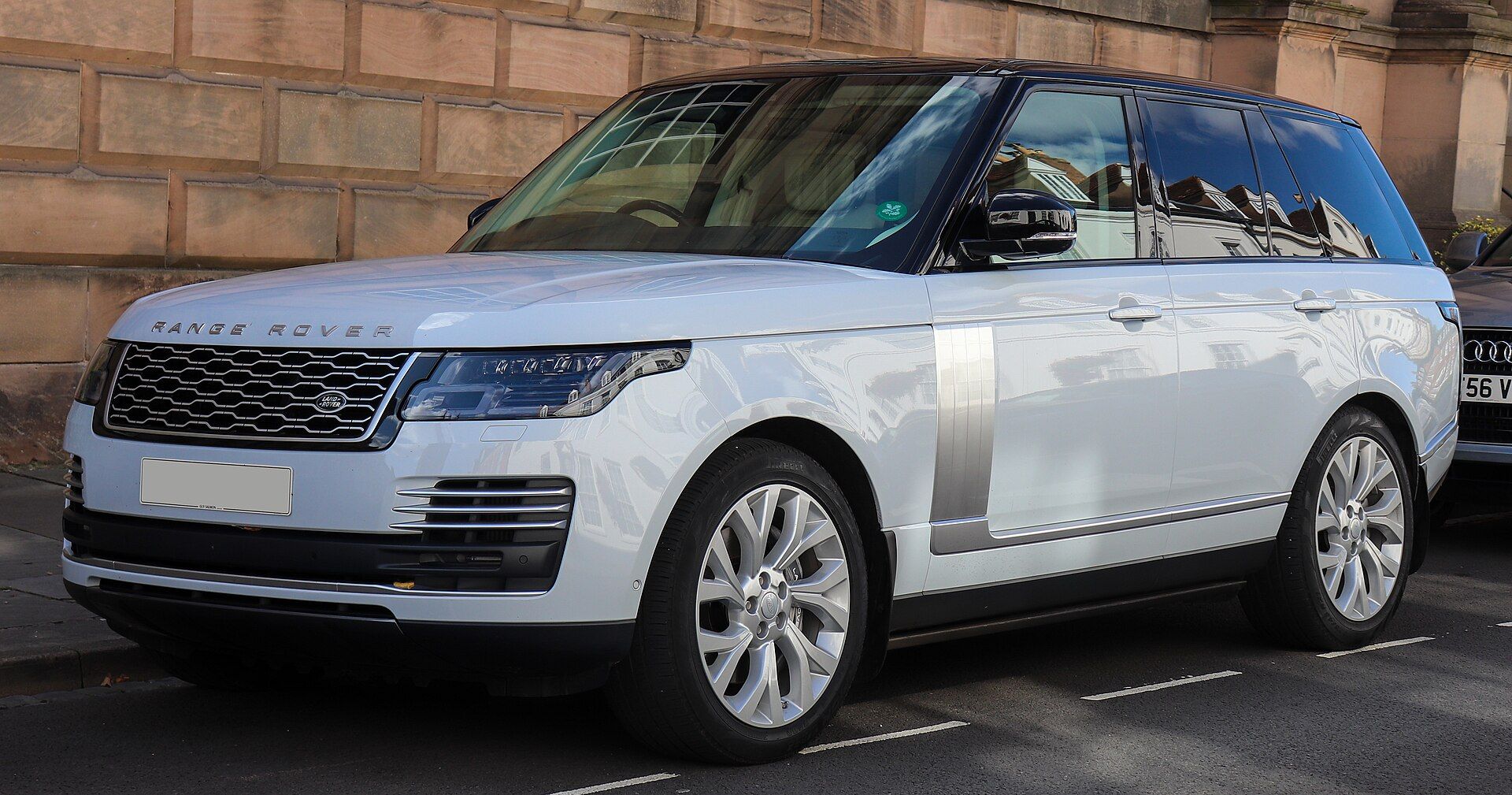
The Range Rover L405 is the fourth generation of Land Rover's large luxury off-roader. It went on sale in autumn 2012, was built in Solihull until 2021 and was the first SUV with an all-aluminium monocoque body, which saved up to 420 kg over its predecessor. It is a five-door in standard wheelbase and, from 2014, a long-wheelbase version about 20 cm longer. Every version has an eight-speed automatic gearbox, four-wheel drive and air suspension. An update for the 2018 model year brought a new interior with two touchscreens and the plug-in hybrid. Road tests praise comfort, refinement and off-road ability; reliability is regarded as patchy, most of all on early cars built before 2015.
Key variants
- 3.0 TDV6 / SDV6 (V6 diesel)
- The V6 diesel is widely available, at launch as the 258 PS TDV6 and later also as the more powerful SDV6. It is the most economical version without a plug, but it has a timing belt with a fixed replacement interval and is known for crankshaft failures.
- 4.4 SDV8 (V8 diesel)
- 339 PS and 700 Nm, offered up to the 2020 model year. The V8 diesel uses timing chains rather than a belt and is regarded as the more robust of the two early diesels, but it uses more fuel.
- D300 / D350 (straight-six diesel)
- For the 2021 model year two 3.0-litre straight-six engines with 48-volt mild-hybrid technology replaced the V6 and V8 diesels. They produce roughly 300 and 350 PS and are found only in the final years of production.
- Petrol: supercharged 3.0 V6 and 5.0 V8
- The supercharged 5.0 V8 makes 510 to 565 PS depending on year and version, the supercharged 3.0 V6 340 PS. Both use considerably more fuel than the diesels. Late model years also offered the P400, a straight-six with mild-hybrid technology.
- P400e and SDV6 Hybrid
- The P400e (from the 2018 model year) pairs a 2.0-litre four-cylinder petrol engine with an electric motor for 404 PS combined and an official electric range of about 31 miles (50 km). A diesel hybrid based on the SDV6 came before it. Both are the most technically complex versions.
Known weak points
- Air suspension and chassis. Leaking air springs and failed compressors and sensors in the standard air suspension are known and expensive faults. Knocking over bumps points to worn front control arms and rear lower arms. The 22-inch wheels are made of a fairly soft alloy and buckle easily on potholes. [2][3][5]
- Diesel engines: V6 crankshaft, V8 EGR valves. On the 3.0 V6 diesel, crankshaft bearing damage up to a broken crankshaft and engine failure is documented. Its timing belt is due, according to Auto Express, every seven years or 112,000 miles (about 180,000 km). The 4.4 SDV8 has neither issue, but it suffers from failing EGR valves, oil leaks at the turbocharger breather and faulty fuel tank sensors. [1][2][4][5]
- Transfer box and rear differential. Juddering at low speed is often put down to degraded oil in the transfer box; an oil change for the transfer box and differentials is recommended about every 30,000 miles (roughly 48,000 km). Vibration at higher speeds can come from a worn rear differential or buckled wheels and is expensive to put right. [1][2]
- Electrics and infotainment. Electronic faults are common: warning messages that appear for no reason, screens that fail or flicker, a slow infotainment system, faulty climate control buttons and window switches. In some cases the rotary gear selector does not rise, so no gear can be selected. Early cars up to about 2015 are affected most. [1][2][3][5]
- Panel fit and water ingress. Uneven panel gaps on the bonnet, tailgate and rear doors and poorly fitted door seals are typical, especially on early cars. The bonnet sensor sometimes wrongly reports the bonnet as open. Leaks at the sunroof and around the tailgate can damage the electronics; the sunroof drains have to be kept clear. The lettering on the bonnet and tailgate tarnishes. [2][3][4][5]
- Numerous recalls. Auto Express counts 26 recalls for the L405. They include doors that do not latch properly and can open while driving, incorrectly manufactured wheel nuts, a crankshaft position sensor that can make the engine cut out, fuel leaks and, on the plug-in hybrid of model years 2018 and 2019, a wrong fuel gauge reading that can leave the car stranded. [1][3]
Checklist for the viewing
- Run the air suspension through all its height settings: the car must rise and lower evenly and without a fault message; listen for knocking over bumps.
- Check the service records in full: the timing belt change on the V6 diesel, plus oil changes for the transfer box and differentials.
- Have a Land Rover dealer check by VIN whether all recalls have been carried out, the door latches and wheel nuts in particular.
- Try every electrical function: infotainment, climate controls, seats, windows, sunroof, tailgate, electric tow bar and the rotary gear selector rising.
- Compare the panel gaps on the bonnet, tailgate and rear doors; look for water marks on the headlining and in the boot and for off-road damage underneath.
- Test drive up to motorway speed: juddering when manoeuvring and vibration at higher speeds are warning signs; check the tyres for uneven wear and the wheels for dents.
Sources
- [1] Used Range Rover (Mk4, L405, 2012-2021) review and buyer's guide — Auto Express
- [2] Range Rover (L405) | PH Used Buying Guide — PistonHeads
- [3] Used Land Rover Range Rover 2013-2022 reliability review — What Car?
- [4] Land Rover Range Rover [L405] (2017 - 2021) used car review — RAC Drive
- [5] Used Land Rover Range Rover (L405) review — ReDriven
- [6] Range Rover and Range Rover Sport get new straight-six diesel in 2021 update — Auto Express
- [7] Range Rover (L405) — Wikipedia
Researched: 22 November 2026
Price Distribution
25th Percentile
€16,688
Median (50%)
€25,944
75th Percentile
€53,290
90th Percentile
€93,448
The median shows the middle price - 50% of listings are below, 50% above.
Mileage and Price
Correlation
moderate
Mileage Range
-61%
Price Trend
-€2,947/10k km
Relationship between mileage and price.
Market Activity
Current
64
Average
79
Maximum
127
Trend
stable
Number of listings over time. More listings mean greater selection for buyers.
Series Comparison: Range Rover
| Model | Average | Deviation | Listings |
|---|---|---|---|
| Range Rover L322 | €9,915 | -74% | 45 |
| Range Rover P38 | €12,941 | -66% | 30 |
| Range Rover Classic | €23,534 | -39% | 24 |
| Range Rover L405 | €38,523 | - | 64 |