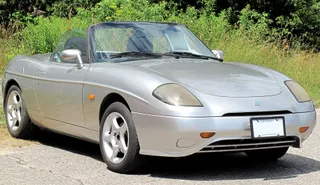
The Fiat Barchetta (Barchetta) (1995-2005) averages €4,330 based on 65 listings. Prices range from €1,500 to €9,999 with an average mileage of 119,474 km.
- Typical price (median): €3,850
- Typical range (middle 50%): €2,999 – €4,950
- Average price: €4,330
- Price range: €1,500 – €9,999
- Production years: 1995-2005
- Average mileage: 119,474 km
- Active listings: 65
Typical price (median)
€3,850
Listings analysed: 65
Typical price range
€2,999 – €4,950
middle 50% of listings
Full range
€1,500 – €9,999
Average: €4,330
Price History
Details
Buying guide: Fiat Barchetta (Barchetta)
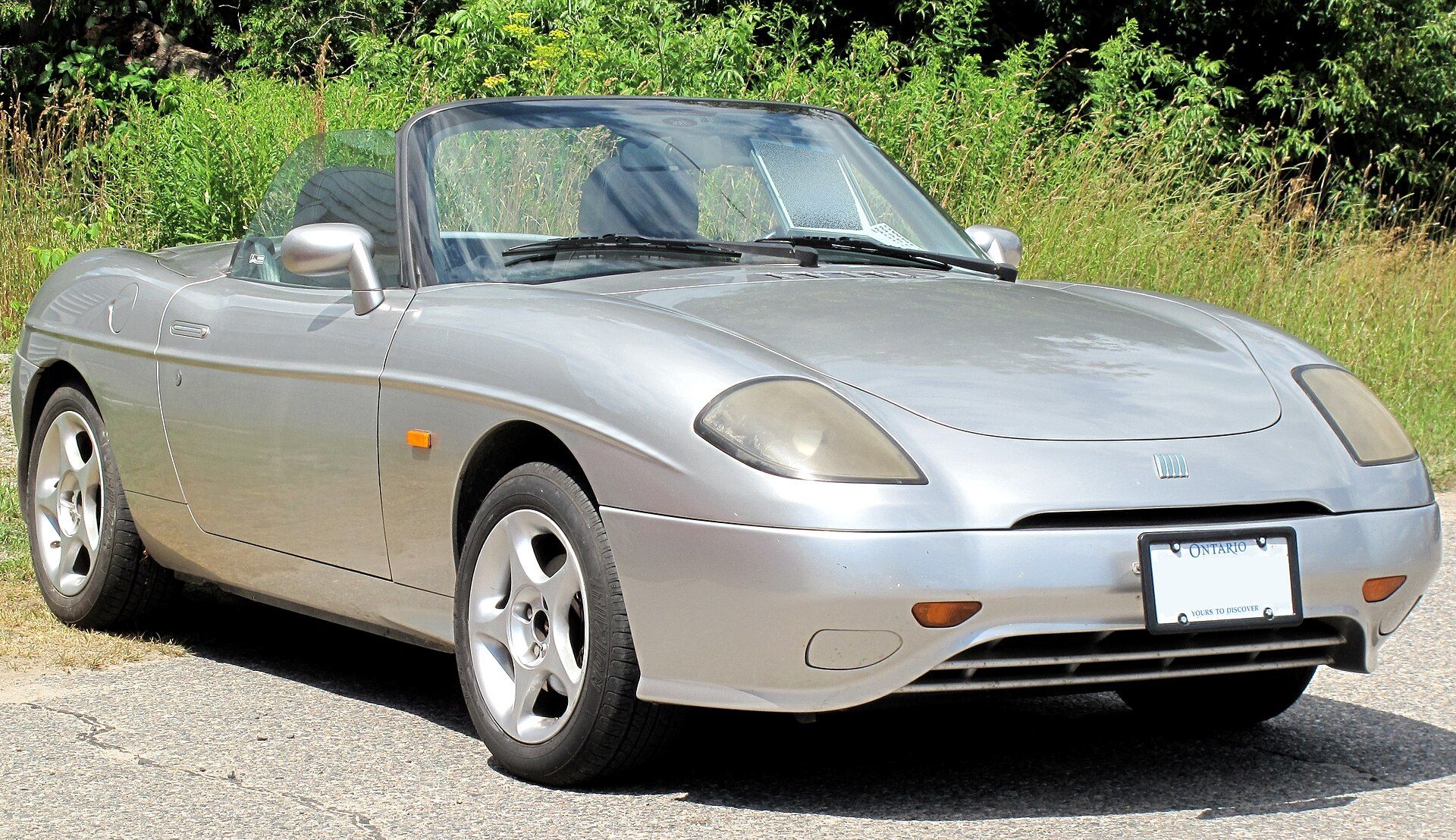
The Fiat Barchetta (type 183) is a two-seat, front-wheel-drive roadster with a fabric hood, built from 1995 to 2005. It sits on a shortened Fiat Punto platform and was offered with a single engine: a 1.8-litre 16-valve four-cylinder with variable intake cam timing and 96 kW (131 PS), paired with a five-speed manual gearbox. Early cars were assembled by the coachbuilder Maggiora in Chivasso, the revised cars from 2003 by Fiat at Mirafiori in Turin; just under 58,000 were made, all with left-hand drive. The mass-production running gear is regarded as straightforward and affordable to maintain, while Barchetta-specific parts, body panels in particular, are harder to find.
Key variants
- 1.8 16V, early cars (1995–1998)
- The original version with 96 kW (131 PS). The first designs of the cam variator fail particularly often, and the early hood frame can trap the fabric. Depending on market and build year, a passenger airbag and ABS were not standard at first.
- 1.8 16V (1999–2002)
- Same output, with detail changes to the engine. The variator design fitted from February 1999 was meant to last longer, although the problem did not disappear entirely. These cars were still built by Maggiora and carry a third brake light from 2000.
- Special editions (Limited Edition, Riviera and others)
- Mechanically identical to the standard car; the differences are paint colours, leather trim and accessories. The 1998 Limited Edition came in grey with burgundy leather or in green with beige seats. For a buyer, condition matters more than the edition.
- Facelift (2003–2005)
- Recognisable by the reshaped front and rear bumpers, and better equipped as standard. Fiat built these cars itself at Mirafiori. The interior plastics are considered less hard-wearing than those of the earlier cars.
Known weak points
- Intake camshaft variator. The variator on the intake camshaft is the engine's best-known weakness. A faulty unit shows itself through a persistent diesel-like clatter straight after starting and a noticeable loss of power. Cars built up to early 1999 are affected most; Fiat revised the part several times but never fully cured the problem before production ended. It makes sense to renew the variator as part of a timing belt change. [1][2][3][5]
- Timing belt, water pump and thermostat. Changing the timing belt is a laborious job that needs special tools. The sources disagree on the interval (from 80,000 km or three years to 100,000 km or six years); without proof of a recent change, plan for one. The water pump can only be reached with the belt drive dismantled, so it is replaced at the same time. The thermostat is known to fail often. [2][5]
- Rust and bodywork. Despite its galvanised body the Barchetta can rust, mainly at the wheel arches, sills, floor pan, chassis rails and jacking points. The metal of the bonnet and boot lid is thin and dents easily, especially on early cars. Body panels are hard to source, and the welded-on front wings make accident repairs involved. [1][2][3]
- Hood, seals and water ingress. On early cars the hood frame could trap the fabric, leading to chafe marks, holes and leaks. The seals around the hood and door glass often let water into the cabin and cause wind noise. Poorly sealed tail lights can also fill with water. An original hood is usually worn out after this many years. [1][3]
- Intake hose and heat shield. The intake hose cracks with age, so the engine draws in unmetered air; Fiat no longer supplies the part, but reproductions exist. The heat shield on the exhaust manifold tends to crack and then makes itself heard as a vibrating noise from the engine bay. [2]
- Strut top mounts, ABS sensors and handbrake cables. The strut top mounts, which are specific to the Barchetta, are often worn. The ABS sensors are considered short-lived, and water can get into the handbrake cables and make them seize. The gearbox and steering, by contrast, have no typical faults. [2][5]
Checklist for the viewing
- Start the engine from cold and listen: a diesel-like clatter straight after starting or at around 2,000 rpm, together with sluggish pull, points to a faulty variator.
- Ask for invoices for the last timing belt change (date and mileage) and check whether the water pump, thermostat and variator were renewed at the same time.
- On a lift, inspect the wheel arches, sills, floor pan, chassis rails and jacking points for rust and signs of welding.
- Check the hood fabric for chafe marks and holes and the seals for cracks; feel the carpets and seats for damp and look for water or cloudy lenses in the tail lights and headlights.
- Look over the bonnet and boot lid for dents, and the panel gaps and paint for signs of accident repair, because body panels are hard to obtain.
- Raise the side windows and try to rock them: if they wobble, the guides in the window regulator are usually broken. Also check that the ABS warning light goes out and the handbrake releases cleanly.
Sources
- [1] Fiat Barchetta (ab 1995) – Gebrauchtwagentest — Auto Bild
- [2] Fiat Barchetta Unterhaltskosten, Wartung, Reparaturen, Preise — auto motor und sport
- [3] Fiat Barchetta | Alternative Classics — Goodwood Classic Solutions
- [4] Fiat Barchetta: la guida all'acquisto — alVolante
- [5] Kaufberatung Fiat Barchetta: Groß- und Kleinserie — autorevue
Researched: 22 November 2026
Price Distribution
25th Percentile
€2,999
Median (50%)
€3,850
75th Percentile
€4,950
90th Percentile
€7,100
The median shows the middle price - 50% of listings are below, 50% above.
Mileage and Price
Correlation
moderate
Mileage Range
-51%
Price Trend
-€273/10k km
Relationship between mileage and price.
Market Activity
Current
65
Average
88
Maximum
133
Trend
stable
Number of listings over time. More listings mean greater selection for buyers.
Seasonal Price Patterns
Cheapest Month
Nov
€4,416
Most Expensive Month
Jun
€6,663
Price difference between cheapest and most expensive month: €2,247. The timing of purchase can significantly affect the price.