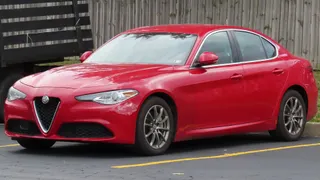
The Alfa Romeo Giulia Modern (Giulia 952) (2015-2025) averages €31,928 based on 66 listings. Prices range from €9,999 to €85,000 with an average mileage of 74,285 km.
- Typical price (median): €29,945
- Typical range (middle 50%): €19,258 – €38,510
- Average price: €31,928
- Price range: €9,999 – €85,000
- Production years: 2015-2025
- Average mileage: 74,285 km
- Active listings: 66
Typical price (median)
€29,945
Listings analysed: 66
Typical price range
€19,258 – €38,510
middle 50% of listings
Full range
€9,999 – €85,000
Average: €31,928
Price History
Details
Buying guide: Alfa Romeo Giulia Modern (Giulia 952)
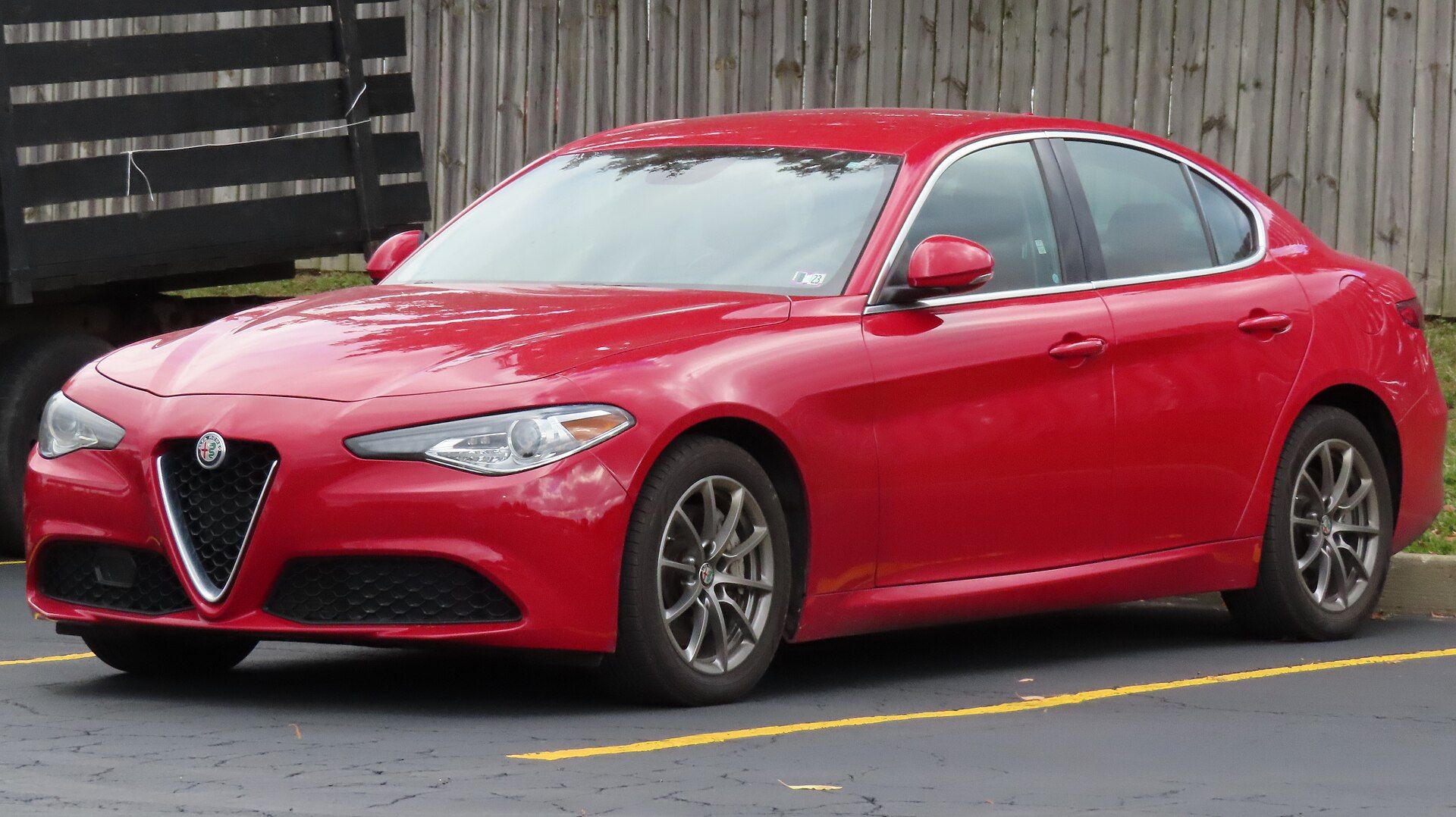
The Alfa Romeo Giulia (type 952) is a four-door mid-size saloon with rear-wheel drive or Q4 all-wheel drive, built at the Cassino plant since 2016; no estate version was offered. It uses the Giorgio platform shared with the Stelvio. Engines are a 2.2-litre diesel, a 2.0-litre turbo petrol and, in the Quadrifoglio, a 2.9-litre twin-turbo V6. Updates followed for model year 2020 and in 2023. Reviewers praise the handling and steering but criticise the tight rear seats, uneven build quality and the infotainment of the early years. According to Auto Zeitung it does better than average in most areas of the German GTÜ roadworthiness inspections; repairs are considered more expensive than usual for the class.
Key variants
- 2.2 diesel (136 to 210 hp)
- The four-cylinder diesel is the most widespread engine. At launch it made 150, 180 or 210 hp; from 2018, with AdBlue exhaust treatment, 136, 160, 190 or 210 hp. A six-speed manual was offered at first, later only the eight-speed automatic. The engine has a timing belt that must be changed on schedule.
- 2.0 turbo (200 hp)
- Four-cylinder turbo petrol with rear-wheel drive, much rarer than the diesel. This output was dropped with the 2023 facelift.
- 2.0 turbo Veloce (280 hp)
- Available since 2017, always with the eight-speed automatic and sold in Germany and Italy with Q4 all-wheel drive. Veloce is a trim level that also existed with the 210 hp diesel, so check the engine in the registration papers.
- Quadrifoglio (2.9 V6 twin-turbo, 510 hp)
- Top model, rear-wheel drive only and mostly with the eight-speed automatic; in continental Europe a six-speed manual was offered at first. Since the 2023 facelift it makes 520 hp and has a mechanical limited-slip differential. The limited-run GTA and GTAm of 2020 reach 540 hp.
- Model year 2020 and 2023 facelift
- Model year 2020 brought a touchscreen infotainment system, a new centre console, better cabin materials and additional driver assistance systems. The 2023 facelift added LED matrix headlights and a 12.3-inch digital instrument cluster.
Known weak points
- Electronics, infotainment and electrical system. Cars from 2016 and 2017 in particular suffered from a black or frozen infotainment screen, a radio that switched off, Bluetooth dropouts, an inaccurate fuel gauge and warning messages without a real fault. Much of this was cured by software updates. The electrical system is sensitive to low voltage: battery failures are sometimes preceded by the start-stop system ceasing to work. [1][4][5]
- Suspension and steering. According to Auto Bild the bushes of the lower suspension arms often wear early, and overhauling the multi-link axles is laborious. Owners report the front suspension clunking over small bumps. A creaking or squeaking steering system can often be cured by professional regreasing. The suspension is also the weaker area in the German GTÜ roadworthiness inspections. [1][2][4]
- Diesel: AdBlue, exhaust sensors and fuel leak recall. On the 2.2 diesel, faults in the AdBlue system and the exhaust sensors are not rare. Diesels built between late 2017 and 2019 were recalled for possible fuel leaks; alVolante gives a faulty seal on the fuel filter as the cause. A brand dealer can confirm from the chassis number whether the work has been done. [1][3][5]
- 2.0 turbo: coolant loss and misfires. Some petrol cars from 2016 and 2017 needed coolant topping up more often than normal because of a faulty thermostat gasket; uneven running was reported as well. Auto Bild also names loss of power caused by defective pump relays, turbocharger problems in some cases and misfires on the third cylinder. [1][5]
- Oil leaks at engine, gearbox and front differential. Auto Zeitung reports oil leaks at the engine and gearbox. On Q4 all-wheel-drive versions oil escaped from the front differential, usually at the seal where the drive shaft connects; according to alVolante this was resolved from 2018 and mainly concerns the older cars. [2][5]
- Rust and body details. According to Auto Bild, first rust spots appear quite often even on younger cars above the windscreen, at the joint to the roof and on the boot lid. In isolated cases the boot lid wiring loom breaks, and some bonnets flutter. The PistonHeads guide to the Quadrifoglio also mentions frequent stone chips and, on early cars, wrongly set bump stops that let the boot lid touch the bumper. [1][6]
- Quadrifoglio: wear, warning messages and faults of early cars. Brakes and tyres wear quickly and parts are expensive. Reports mention warning messages with no traceable cause (electronic throttle control, check engine light), failed fuel pumps and batteries, and coolant loss at loose hose clamps. On early cars the scuttle panel below the windscreen let water reach the engine control unit; a revised part exists. In 2021 there was a recall for possible cracks in the rear brake discs. [1][3][6]
Checklist for the viewing
- Try every electronic function: infotainment screen, radio, Bluetooth, fuel gauge, start-stop system and electric parking brake; watch for warning messages and have the fault memory read.
- Ask an Alfa Romeo dealer to confirm from the chassis number that all recalls and software updates have been carried out; according to Auto Bild the German authority KBA lists 16 recalls for the Giulia.
- Include poor roads in the test drive: clunking from the front axle or a creaking steering can point to worn suspension bushes; have the suspension arms and dampers inspected on a lift.
- Check the underside for oil at the engine, the gearbox and, on Q4 cars, the front differential; check the coolant level on the 2.0 turbo and the area around the fuel filter on the diesel.
- Look for the beginnings of rust above the windscreen, along the roof joint and on the boot lid; note stone chips at the front and signs of accident repairs.
- Insist on a complete service history: on the diesel ask about the timing belt change when due, on the Quadrifoglio about replacement of the auxiliary belt and tensioner and the condition of brakes and tyres.
Sources
- [1] Gebrauchtwagen-Test: Alfa Romeo Giulia (952) — AUTO BILD
- [2] Alfa Romeo Giulia/Audi A4: Gebrauchtwagen — AUTO ZEITUNG
- [3] Used Alfa Romeo Giulia (Mk1, 2016-date) review — Auto Express
- [4] Alfa Romeo Giulia (2016 - 2022) used car review — RAC Drive
- [5] Alfa Romeo Giulia usata: pregi e difetti — alVolante
- [6] Alfa Giulia Quadrifoglio | PH Used Buying Guide — PistonHeads
- [7] Alfa Romeo Giulia (2015) — Wikipedia
Researched: 22 November 2026
Price Distribution
25th Percentile
€19,258
Median (50%)
€29,945
75th Percentile
€38,510
90th Percentile
€54,700
The median shows the middle price - 50% of listings are below, 50% above.
Mileage and Price
Correlation
moderate
Mileage Range
-57%
Price Trend
-€1,709/10k km
Relationship between mileage and price.
Market Activity
Current
66
Average
78
Maximum
88
Trend
stable
Number of listings over time. More listings mean greater selection for buyers.